
Saddle Stitch or Perfect Binding? How to Choose What’s Right for Your Publication
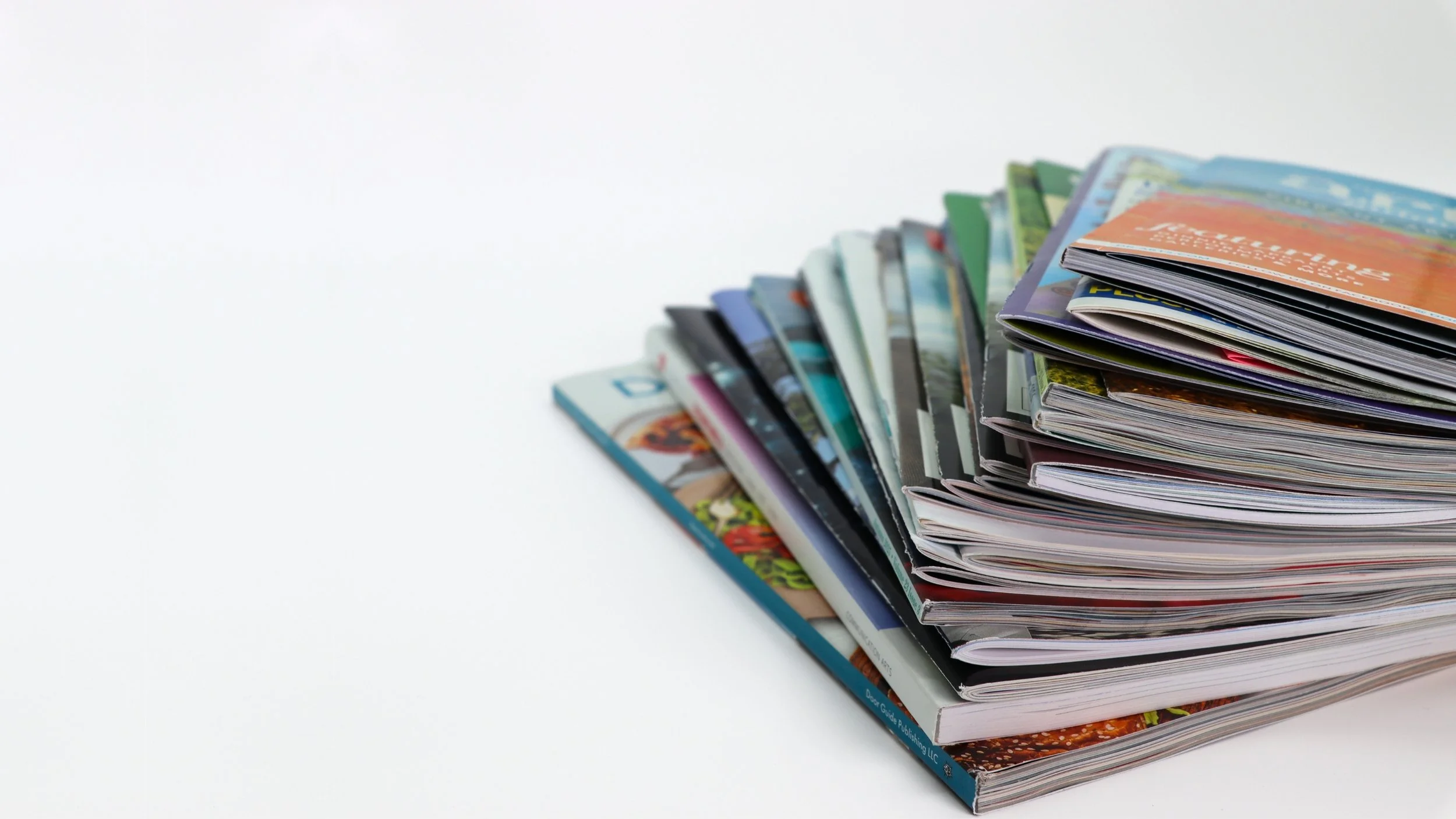
For magazine, directory, journal, and alumni publishers, binding can feel like a small production detail — until it isn’t. The binding you choose affects how your publication is read, how long it’s kept, how it mails, and how your brand is perceived. Whether you’re planning a recurring magazine, an annual directory, or a special-edition sourcebook, understanding the strengths of saddle stitch and perfect binding can help you make smarter, more cost-effective decisions from the start.
Saddle Stitch: Lightweight, Readable, and Cost‑Efficient
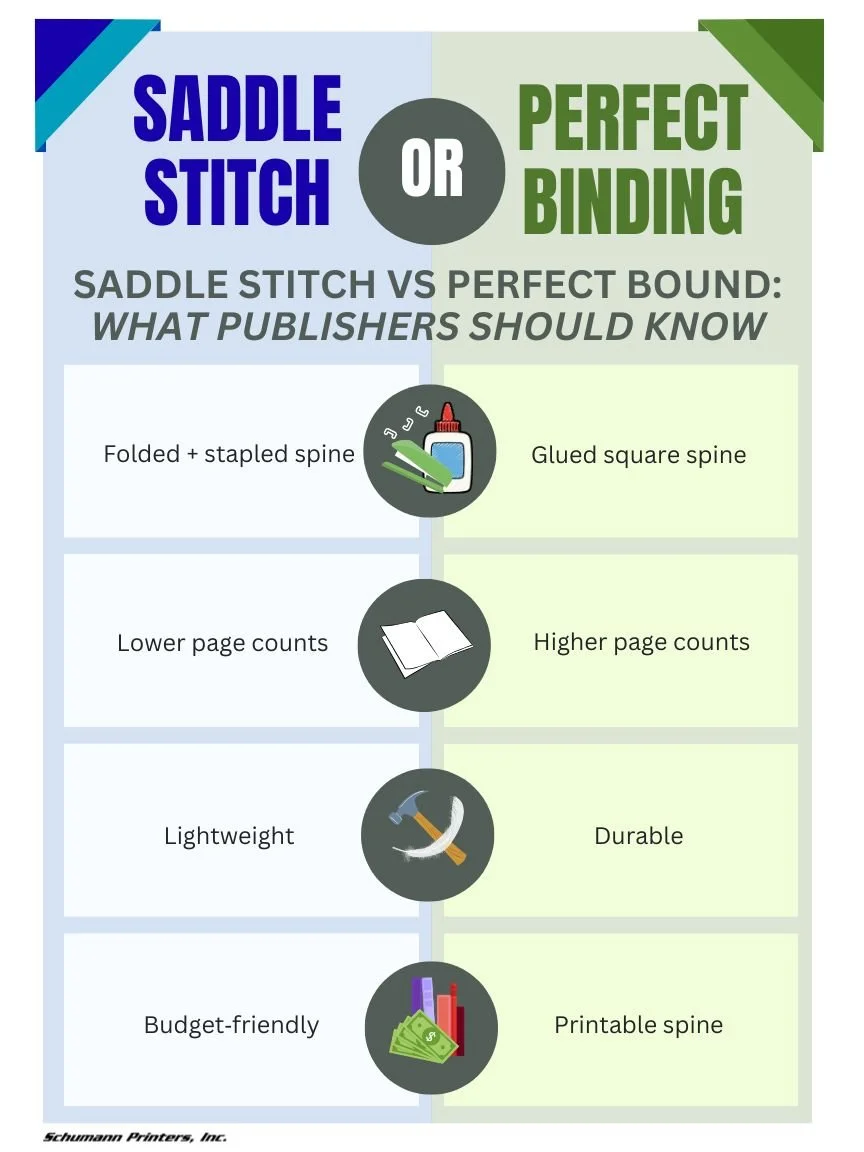
Saddle stitching uses folded sheets that are stapled along the spine. It’s a popular choice for many publications — and for good reason.
Best suited for:
Alumni magazines
Association journals
Event or membership publications
Lower page counts (typically under 64 pages)
Why publishers choose it:
Budget‑friendly production
Lightweight and postage‑efficient
Lays flat for easy reading
Fast turnaround times
Things to consider:
No printable spine for titles
Less durable for long‑term reference or archiving
Saddle stitch shines when your goal is an approachable, mail‑friendly publication designed to be read cover to cover.
Perfect Binding: Polished, Durable, and Shelf‑Ready
Perfect binding creates a square spine by gluing pages together, giving publications a more book‑like finish.
Best suited for:
Directories
Sourcebooks
Higher‑page‑count magazines
Annual or reference publications
Why publishers choose it:
Professional, polished appearance
Printable spine for easy identification
Handles higher page counts
Greater durability over time
Things to consider:
Slightly higher production cost
Heavier weight may affect postage
Does not naturally lay flat without design considerations
Perfect binding is ideal when longevity, branding, and shelf presence matter.
Let Content Guide the Binding Choice
One of the most helpful questions a publisher can ask isn’t “Which binding is cheaper?” but “How will this publication be used?”
Consider:
Is it read once or referenced all year?
Will it be mailed, handed out, or stocked?
Does it need to feel archival or disposable?
When binding supports the way readers interact with your content, the entire publication feels more intentional.
Production & Budget Tips Publishers Often Overlook
A few planning details can make a big difference:
Page creep: Saddle‑stitched pieces need careful planning as pages push outward
Early page‑count decisions: Late changes can impact cost and timelines
Paper weight matters: Heavier stocks interact differently with each binding type
Early collaboration saves money: Talking binding early avoids last‑minute fixes
There’s no one‑size‑fits‑all answer when it comes to binding. The best choice is the one that supports your content, your readers, and your goals. If you’re planning an upcoming issue or rethinking an existing publication, we’re always happy to be a sounding board and share our insights.